Guide · by Shoda
Thai, Chinese or Japanese massage: what are the differences?
Thai massage uses stretching and rhythmic pressure along energy lines, on a mat, fully clothed. Chinese tui na is a vigorous medical massage based on meridians and acupressure. Japanese shiatsu applies steady finger pressure to precise points. Body to body and nuru are modern sensual styles, the first associated with Thailand, the second with Japan.
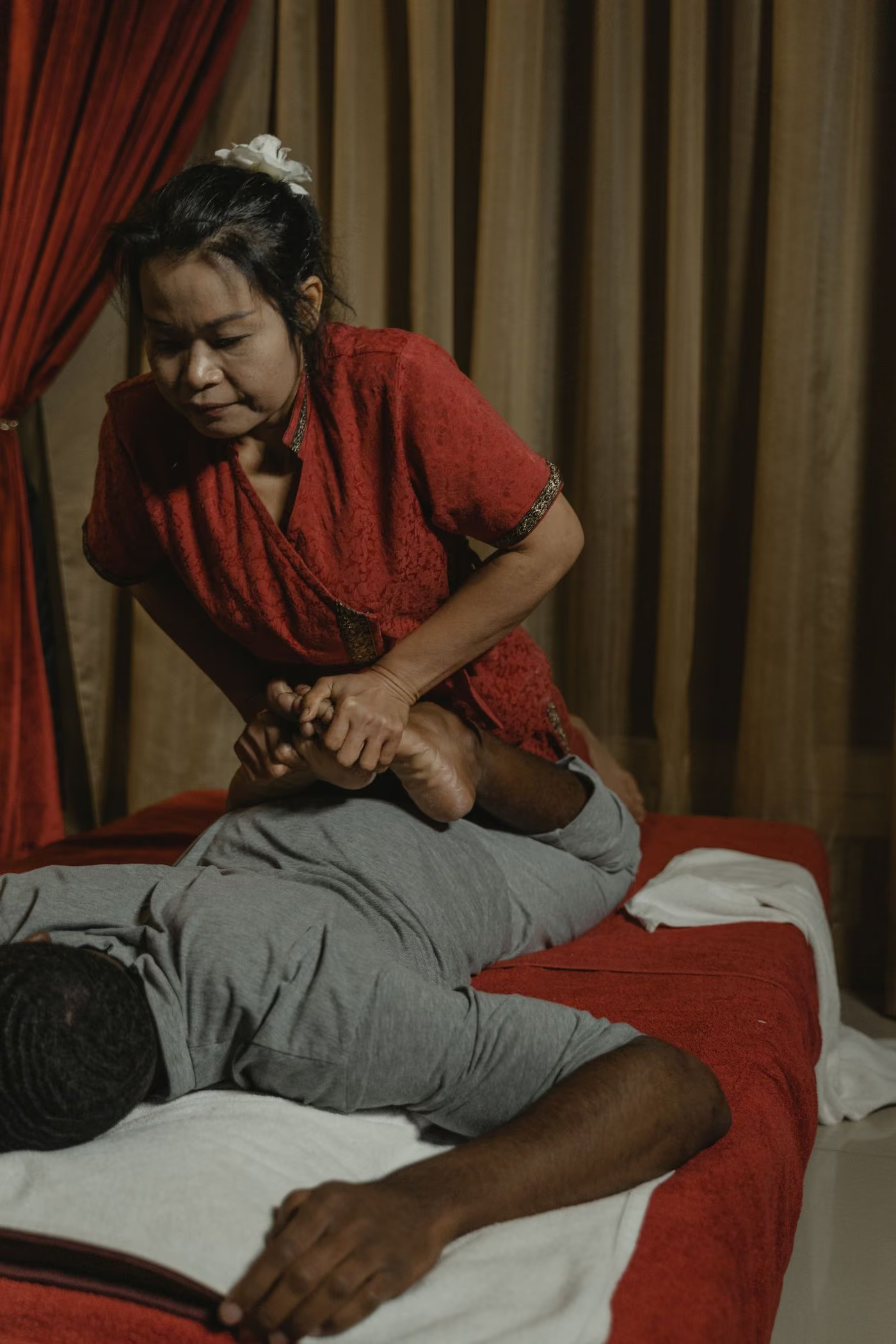
Asian massage: one word, many traditions
In Paris, the term Asian massage covers a wide range of practices, from medical techniques centuries old to modern sensual styles. Thailand, China and Japan each have their own traditions, rooted in different philosophies and producing very different sensations. Knowing the differences helps you choose the massage that suits you, and understand what a salon actually offers.
Thai massage: Nuad Thai
Origins
Traditional Thai massage, Nuad Thai or Nuad Boran, has been practised in Thailand for centuries. Tradition attributes its foundations to Jivaka Kumar Bhacca, a physician said to have been a contemporary of the Buddha, and it blends Indian, Chinese and local Thai influences. The Wat Pho temple in Bangkok is famous for its massage school. In 2019, UNESCO inscribed Nuad Thai on the list of the intangible cultural heritage of humanity.
Technique
Thai massage works along sen lines, energy pathways running through the body. The practitioner uses palms, thumbs, elbows, forearms, knees and even feet to apply rhythmic pressure, and guides the body into stretches often compared to assisted yoga.
How it feels
Dynamic, deep and energising. Traditionally, it is given on a mat on the floor, with the client fully clothed in loose garments, and without oil.
Chinese massage: tui na and reflexology
Origins
Tui na is one of the pillars of traditional Chinese medicine, alongside acupuncture and herbal medicine. Its name combines two gestures: tui, to push, and na, to grasp. Its roots in Chinese medicine go back many centuries.
Technique
Tui na works on the meridians, the channels through which qi, vital energy, is said to flow. The practitioner kneads, presses, rolls and rubs, often targeting a specific complaint: back pain, stiff neck, fatigue. Foot reflexology, based on the idea that zones of the foot correspond to the rest of the body, is also very common in Chinese salons.
How it feels
Firm, precise and sometimes vigorous. It is closer to a therapeutic session than to a relaxing massage, usually given on a table, clothed or through a thin cloth.
Japanese massage: shiatsu and nuru
Shiatsu
Shiatsu means finger pressure. Inspired by older Japanese massage and by Chinese medicine, it was formalised in Japan in the twentieth century. The practitioner applies steady, perpendicular pressure with thumbs, fingers and palms on specific points, combined with gentle stretches. It is given clothed, traditionally on a futon, without oil. The feeling is calm, grounding and precise.
Nuru
At the other end of the spectrum, nuru is a modern Japanese-inspired sensual massage in which the masseuse glides over the client’s body using a very slippery, seaweed-based gel. It has nothing to do with shiatsu and belongs to the family of body to body massages. We explain it in detail in our guide to nuru massage and its gel. Our salon does not offer it: we prefer the body to body with warm oil.
Comparison table
| Thai (Nuad Thai) | Chinese (tui na) | Japanese (shiatsu) | Body to body / nuru | |
|---|---|---|---|---|
| Origin | Thailand, centuries old | China, ancient roots | Japan, 20th century | Modern, Thailand and Japan |
| Energy concept | Sen lines | Meridians and qi | Meridians and points | None in particular |
| Main tools | Palms, thumbs, elbows, knees, feet | Hands, fingers, forearms | Thumbs, fingers, palms | The whole body |
| Oil or gel | No | Rarely | No | Oil or nuru gel |
| Clothing | Loose clothes | Clothed or cloth | Clothed | Skin to skin |
| Setting | Mat on the floor | Table or chair | Futon | Massage table, often a mattress for nuru |
| Feeling | Dynamic, stretching | Firm, targeted | Calm, precise | Warm, enveloping, sensual |
| Goal | Balance, flexibility | Therapeutic | Balance, well-being | Relaxation, the senses |
Where the body to body massage fits
The body to body massage is a modern style associated with South-East Asia, and Thailand in particular. It shares Thai massage’s idea that the whole body can be a massage tool, but replaces the stretches and dry pressure with oil and a slow, enveloping glide. It is not a medical practice: its purpose is relaxation and the awakening of the senses. Our guide what is body to body massage explains it step by step.
What our salon offers
Our salon in Paris 9th specialises in body to body massage and sensual massages, all given by Thai masseuses trained in traditional Thai massage. That training shows in the warm-up of every session: firm palm and thumb pressure, attention to the sen lines, a real understanding of where tension hides.
We also offer the Thai erotic massage and the soapy massage. We do not offer traditional Chinese tui na, reflexology or Japanese shiatsu, which require specific training. Nor do we offer nuru: for the same glide, we suggest the oil body to body rather than nuru. For an overview, see our page on Asian massage in Paris.
Every session is a professional massage, performed by trained masseuses by the book; the masseuse may stop whenever she sees fit, and an indecent request or inappropriate behaviour means immediate cancellation, without refund.
Which one should you choose?
- You want to stretch and feel energised: a traditional Thai massage.
- You have a specific ache to work on: tui na, with a qualified practitioner.
- You want a calm, precise, grounding session: shiatsu.
- You want warmth, slowness and letting go: a body to body massage.
- You want a fluid, full-body glide: a body to body with warm oil, which we prefer to nuru.
At our salon, every massage costs the same: €100 for 30 minutes, €130 for 45 minutes and €150 for an hour, shower included, every day from 11am to 8pm.
Frequently asked questions
Which is more relaxing, Thai or Chinese massage?
It depends on what you need. Traditional Thai massage is dynamic, with stretches and rhythmic pressure, and leaves you both relaxed and energised. Chinese tui na is often firmer and more targeted, closer to a therapeutic session. For pure relaxation and letting go, many people prefer an oil-based massage, such as a Thai body to body.
Do you stay dressed for a traditional Thai massage?
Yes. Traditional Thai massage is given on a mat on the floor, with the client in loose, comfortable clothes and without oil, which makes the stretches easier. Shiatsu is also given clothed. Body to body is the opposite: warm oil, skin-to-skin contact and a massage table, after a warm shower. Nuru, its gel-based cousin, is usually given on a mattress.
Is shiatsu the same as acupressure?
They are related but not identical. Both apply pressure to specific points linked to energy pathways. Acupressure comes from traditional Chinese medicine, while shiatsu, meaning finger pressure, is a Japanese method formalised in the twentieth century, with its own techniques, including the use of palms, thumbs and gentle stretches.
Where should I go for tui na or shiatsu in Paris?
To a qualified practitioner: a traditional Chinese medicine centre for tui na, or a certified shiatsu therapist. Both require specific training, and neither is offered at our salon. If what you want is warmth, slowness and a sensual body to body glide after a Thai warm-up, our Thai masseuses are the right address.
Booking
Ready for a sensual moment of relaxation?
Pick your massage, duration and time: your request goes straight to WhatsApp. Same-day slots subject to availability.
Prefer to call? 06 10 24 97 47