Guide · by Shoda
Tantric massage: origins, benefits and the art of slowness
Tantric massage is a slow, whole-body massage inspired by the philosophy of tantra, an ancient Indian tradition. It combines conscious breathing, feather-light strokes and long, enveloping movements to calm the mind and heighten body awareness. Its main benefits are deep relaxation, stress relief and a renewed connection with your own senses.
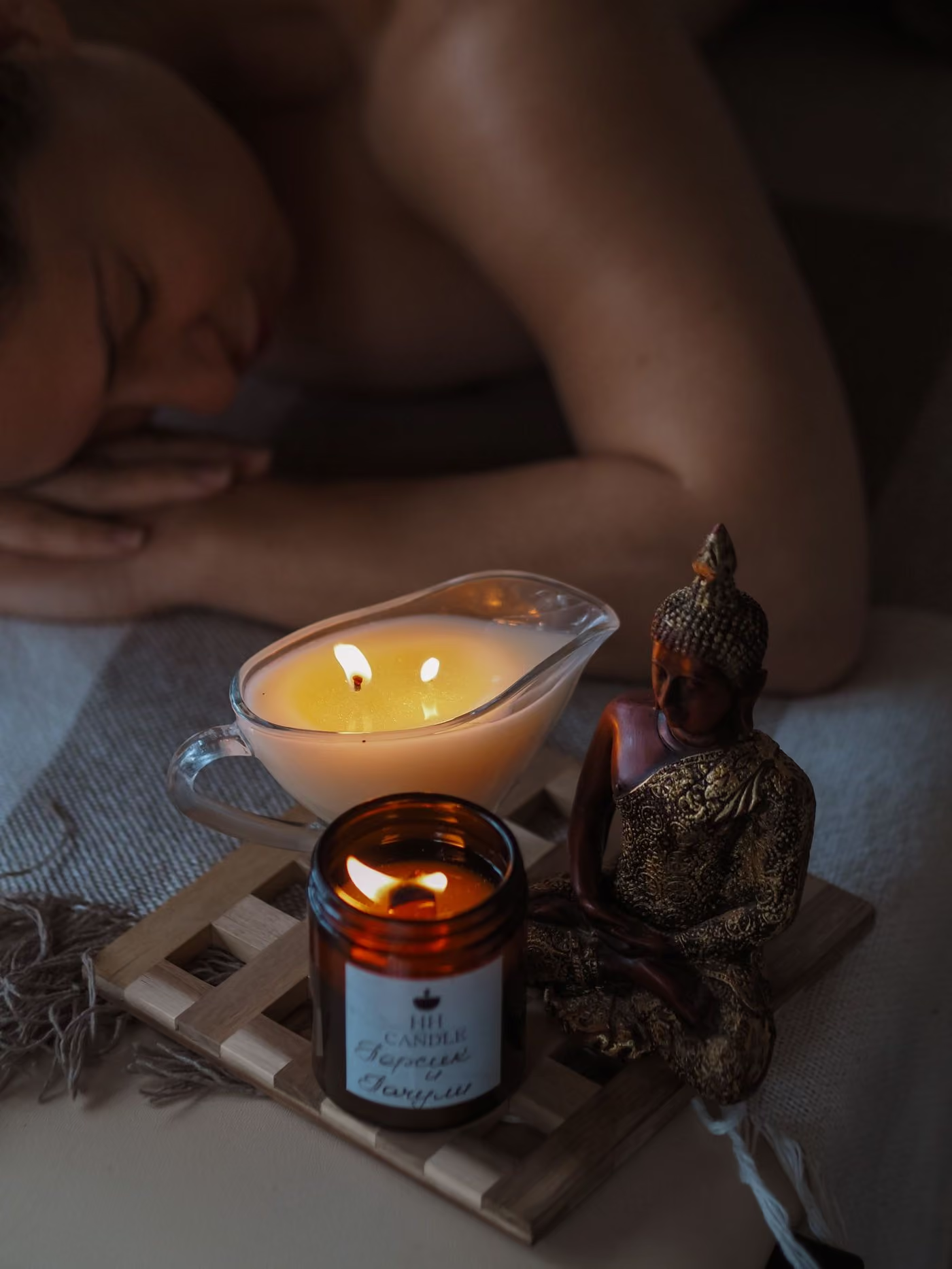
Tantra, in a few words
The word tantra is often misunderstood in the West. In its original sense, it refers to a vast family of spiritual texts and practices that developed in India from around the middle of the first millennium, within both Hinduism and Buddhism. These traditions share a striking idea: that the body is not an obstacle to spiritual life, but a path towards it.
Tantric schools developed rituals, meditations, mantras and breathing techniques, as well as a rich vocabulary of energy: prana, the vital breath; the chakras, centres of energy along the spine; kundalini, a dormant energy said to rise through them. At the heart of many tantric traditions lies the union of two principles, Shiva and Shakti, consciousness and energy.
From tantra to tantric massage
Traditional tantra did not describe a massage in the modern sense. Tantric massage as we know it is a more recent creation, shaped largely in the West from the late twentieth century, when teachers of what is often called neo-tantra borrowed tantric concepts, breath, energy, presence, and applied them to touch.
The result is a massage that is less about technique than about attention. The masseuse does not simply work on muscles: she guides the breath, slows the rhythm, and invites the guest to feel each sensation fully.
How a tantric massage unfolds
Arriving and breathing
After a warm shower, the session usually begins with stillness. Lying down, you are invited to breathe slowly and deeply, sometimes in rhythm with your masseuse. This simple step changes everything: the heart slows, the mind quietens.
Feather-light touch
The first contacts are often very light: fingertips brushing the skin, the back of the hand drawn slowly along the spine. These strokes awaken the skin and sharpen attention. You begin to notice sensations you usually ignore.
Enveloping movements
The massage then deepens with warm oil and long, enveloping strokes, alternating with lighter moments. At our salon, the Thai masseuses weave in the whole-body glide of the body to body massage, making the experience even more immersive.
Return to stillness
The session ends as it began: slowly. A few quiet moments, a warm shower, a glass of water. Most people leave with a sense of calm that lasts well into the evening.
The benefits of tantric massage
It is important to stay honest: tantric massage is a wellness practice, not a medical treatment. But the benefits guests describe are real and consistent.
- Deep relaxation. The slow rhythm and conscious breathing activate the body’s natural relaxation response.
- Stress relief. For a while, the mind stops racing. Many people say they have not felt so calm in months.
- Body awareness. By paying attention to each sensation, you reconnect with a body you often forget in daily life.
- Better breathing. The breathing exercises at the start are simple, and many guests take them home.
- A sense of presence. No performance, no goal: just being here, now.
Tantric massage, sensual massage, erotic massage: what is the difference?
These terms overlap, and salons use them in different ways. Here is how we see it:
| Term | Emphasis |
|---|---|
| Sensual massage | Softness, warmth, awakening of the senses |
| Body to body massage | The glide of the whole body, skin against skin |
| Tantric massage | Breath, slowness, presence, energy |
| Erotic massage | A broad umbrella term for all of the above |
At our salon, every one of these is a professional massage, performed by trained masseuses by the book. The masseuse remains free to stop whenever she sees fit, and an indecent request or inappropriate behaviour ends the session at once, without refund.
What about lingam and yoni massage?
In neo-tantric circles, you may come across the terms lingam massage and yoni massage. These refer to a tantric massage of the intimate area, in the Indian tradition. We do not offer these at the salon. If you are curious about their meaning and history, our article on lingam massage explains the background and suggests what we propose instead.
A simple breathing exercise to try at home
You do not need a massage table to taste the spirit of tantra. Here is the short exercise I often share with guests at the start of a session.
- Sit or lie comfortably and close your eyes.
- Breathe in slowly through the nose for a count of four, letting the belly rise first, then the chest.
- Pause gently for a count of two.
- Breathe out through the mouth for a count of six, as if sighing softly.
- Repeat for five minutes, bringing your attention back to the breath each time the mind wanders.
A longer exhale than inhale is a simple, well-known way of calming the body. Done before a massage, it helps you arrive fully; done in the evening, it prepares you for sleep. It costs nothing and takes five minutes: the first step of any tantric practice.
Getting the most out of your session
- Choose at least 45 minutes. Tantric massage needs time; half an hour feels rushed.
- Arrive early and unhurried. Rushing in from a meeting makes it harder to slow down.
- Switch off your phone before the session, not just to silent.
- Follow the breath. When your mind wanders, come back to your breathing.
- Let go of expectations. The less you anticipate, the more you feel.
Ready to experience it? Discover our tantric massage in Paris, available every day from 11am to 8pm at 42 rue de Bruxelles. It follows the same price list as all our massages: €100 for 30 minutes, €130 for 45 minutes and €150 for an hour, shower included.
This guide was written by Shoda, the salon’s lead masseuse, trained in Thai massage in Thailand.
Frequently asked questions
Where does tantric massage come from?
It draws on tantra, a family of spiritual traditions that developed in India from around the middle of the first millennium, within both Hinduism and Buddhism. Tantric massage as practised today is a modern creation, shaped largely in the West in the late twentieth century, which borrows tantra's ideas of energy, breath and presence.
What are the benefits of a tantric massage?
Guests mainly describe deep relaxation, a calmer mind, better awareness of their body and a feeling of reconnection with their senses. The slow rhythm and conscious breathing help release accumulated stress. It is a wellness practice, not a medical treatment, and it does not replace medical advice for any health condition.
Is tantric massage a spiritual practice?
It is inspired by a spiritual tradition, but you do not need to share any belief to enjoy it. The massage borrows tantra's attention to breath, presence and the senses, and uses them as tools for relaxation. Some people experience it as a form of meditation, others simply as a very slow, calming massage. Both are fine.
Do I need to know anything about tantra before booking?
No knowledge is needed. Your masseuse will guide you, starting with a few slow breaths together. All you need to do is arrive unhurried, switch off your phone and let yourself be guided. Choosing 45 minutes or an hour gives the massage time to unfold at its natural, slow pace.
Booking
Ready for a sensual moment of relaxation?
Pick your massage, duration and time: your request goes straight to WhatsApp. Same-day slots subject to availability.
Prefer to call? 06 10 24 97 47